Water Pressure Problems at Home: Causes and Fixes
Ever turned on your shower expecting a steady, hot stream—only to be disappointed by a trickle? Or maybe your kitchen faucet blasts like a fire hose, sending water everywhere. Water pressure problems can sneak up on any homeowner, and they’re more than just annoying.
At Veterans Plumbing, we know how frustrating and urgent these issues feel. Whether you’re dealing with a slow sink or a burst pipe, our emergency plumbing team is ready to help. But before you pick up the phone, let’s break down why these problems happen and what you can do right now.
Common Causes of Water Pressure Issues 🛠️
Most water pressure trouble comes from a handful of usual suspects. Sometimes it’s as simple as a clogged aerator; other times, it’s a symptom of something much bigger.
- Hidden leaks: Even a tiny pinhole in a pipe can bleed pressure from your system. According to the EPA, an average household’s leaks can waste nearly 10,000 gallons of water yearly.
- Blockages: Mineral buildup in pipes—think of it like plaque in arteries—can choke your water flow. This is especially common in older homes or areas with hard water.
- Faulty pressure regulator: This device keeps your home’s water at a safe pressure. If it fails, you could see dramatic spikes or drops.
- Municipal supply fluctuations: Sometimes, the problem isn’t even on your property. Local water main repairs or seasonal changes can lower or raise pressure.
- Partially closed shut-off valves: If a valve near your water meter or under your sink isn’t fully open, you’ll notice reduced flow.
- Old or corroded pipes: Galvanized steel pipes, common in homes built before the 1960s, rust from the inside out—shrinking the space for water to travel.
Tip: High water pressure can be just as damaging as low pressure, putting extra strain on appliances and pipes.
DIY Troubleshooting Steps
Before calling in emergency plumbing help, there are a few steps you can try on your own.
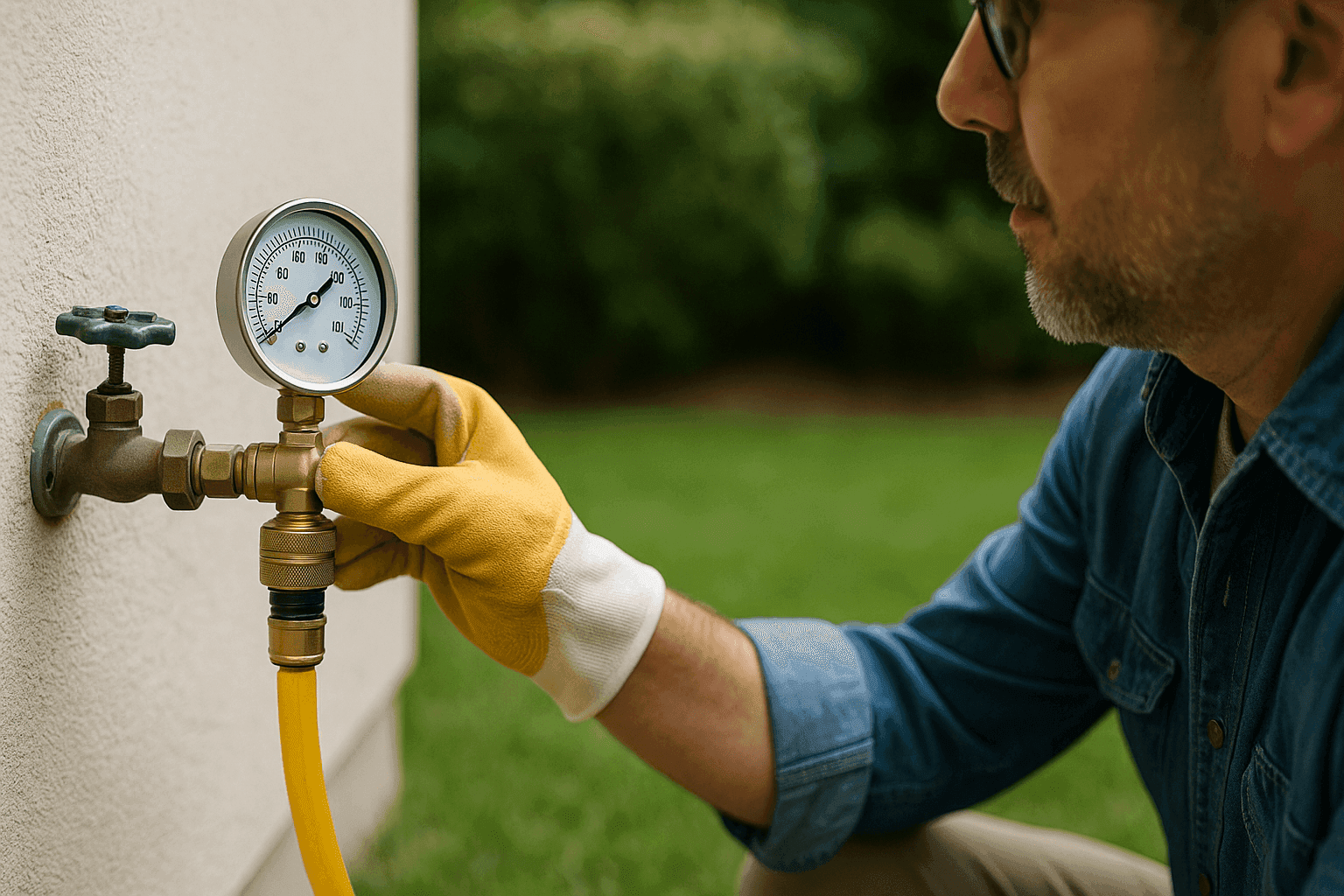
1. Check Your Water Pressure with a Gauge
A simple, inexpensive gauge (available at most hardware stores) can tell you a lot.
- Attach the gauge to an outdoor spigot or the cold laundry faucet.
- Make sure all indoor faucets and appliances are off.
- Open the spigot fully and read the gauge.
- Normal residential pressure: 40–80 psi (pounds per square inch). Anything under 40 psi is low; above 80 psi is high.
2. Inspect for Obvious Leaks or Blockages
- Walk through your home and check under sinks, around toilets, and in the basement for signs of water.
- Listen for hissing or dripping sounds in walls.
- Check faucet aerators for sediment. Unscrew and clean them if clogged.
3. Examine Shut-Off Valves
- Ensure the main shut-off (often near the water meter) is fully open.
- Check individual fixture valves.
4. Look at the Pressure Regulator
- If you have a bell-shaped device on your main line, that’s your regulator.
- If the gauge shows too high or too low, this device may need adjustment or replacement.
- To adjust: Turn the nut clockwise to increase, counterclockwise to decrease—small turns only.
Note: Never force a stuck valve or overtighten a regulator. If unsure, stop and call a professional. Working on gas lines, in particular, should only be handled by a licensed plumber. Gas Line Installation near you should always follow local building codes and safety guidelines, like those from the International Plumbing Code (IPC).
When to Call a Plumber
Some problems go deeper than surface fixes. Here’s when to reach out to Veterans Plumbing:
- Water pressure drops suddenly throughout your home.
- You find leaks, damp spots, or water stains on walls or ceilings.
- You hear banging, rattling, or “water hammer” noises in pipes.
- Pressure regulator is broken or missing.
- Any signs of rust, green corrosion, or visible pipe damage.
- If you need emergency plumbing for major leaks, burst pipes, or water flooding.
Remember, even small leaks can cause big structural problems over time. Don’t wait too long.
Quick Safety Checklist
- Know where your main water shut-off valve is. Label it for easy access.
- If you suspect a gas line leak or smell gas, evacuate your home and contact your utility provider or emergency services immediately.
- Wear gloves and eye protection if inspecting pipes or removing aerators.
- Never attempt electrical repairs near wet areas.
- Comply with local codes for any DIY plumbing work (check your city’s building department or the Uniform Plumbing Code).
Water Pressure System Diagram
Imagine your home’s plumbing like a network of roads. Water flows in from the main “highway” (the municipal line), passes through a checkpoint (shut-off valve and pressure regulator), and branches out to all your fixtures. If there’s a traffic jam (blockage), a leak (pothole), or a detour (closed valve), pressure suffers.
- Main supply → Shut-off valve → Pressure regulator → Distribution pipes → Fixtures
- Bends and old pipes = slow traffic
- Blockages = closed lanes
- Leaks = water escaping the road
What Pros Do On Arrival
When you call Veterans Plumbing for emergency plumbing or persistent water pressure headaches, here’s what happens:
- We use calibrated pressure gauges to test at multiple points in your system.
- Visual inspection for leaks, corrosion, and worn-out fittings.
- Thermal imaging or acoustic leak detection to find hidden problems (like leaks in walls or underground).
- We’ll check your pressure regulator, main shut-off, and all visible supply lines.
- For sewer line or water main issues, we might use a camera for a detailed look (sewer line inspection).
- If needed, we’ll recommend pipe repair, repiping, or fixture installation—always in line with state and local plumbing codes.
Prevention & Maintenance
An ounce of prevention is worth a pound of cleanup. Here’s how to keep pressure problems at bay:
- Schedule annual plumbing inspections with a licensed professional.
- Clean faucet aerators every few months.
- Consider a water filtration system to reduce mineral buildup.
- Install a pressure-reducing valve if your area has high municipal pressure.
- Test your sump pump and backflow prevention devices regularly, especially before storm season.
- Address slow drains, gurgling toilets, or unexplained dampness promptly.
Costs & Time Factors
Water pressure repairs can range from a quick fix to major work. Here’s what to expect:
- Cleaning an aerator or replacing a fixture: usually under an hour.
- Pressure regulator adjustments or replacement: 1–3 hours.
- Leak detection and pipe repair: a few hours to a day, depending on access and pipe material.
- Major repiping or water main work: may require several days and temporary water shut-off.
Tip: The sooner you act, the more you save—both on water bills and potential damage.
When It’s an Emergency
Some water pressure problems just can’t wait:
- Sudden loss of all water pressure.
- Flooding from burst pipes or water heaters.
- Serious leaks that threaten your home’s foundation or electrical system.
- Signs of gas leaks (rotten egg smell) during plumbing work.
In these cases, shut off your main water supply immediately and call Veterans Plumbing’s emergency plumbing line. Fast action protects your home and your family.
FAQ
How do I know if my water pressure is too high?
If faucets spray or bang when turned on, or if appliances like your dishwasher wear out quickly, pressure may be too high. Use a pressure gauge to check.
Can I fix low water pressure myself?
Sometimes! Cleaning aerators, checking valves, or adjusting the regulator can help. But persistent problems usually need a plumber.
Are water pressure problems dangerous?
Yes—high pressure can burst pipes or damage appliances. Low pressure can be a sign of leaks, which may cause mold or structural damage.
Does my city regulate water pressure?
Most municipalities require pressure to stay between 40–80 psi for safety. Check your local plumbing code or ask your water utility for details.
Local/Seasonal Considerations 🌦️
- In cold climates, frozen pipes can cause sudden drops in water pressure. Insulate exposed pipes before winter.
- Heavy rain or drought may affect municipal water pressure, especially in older neighborhoods.
- After earthquakes or city construction, underground lines may shift or break—watch for changes in pressure or water quality.
If you’re dealing with water pressure headaches, don’t let the problem linger. Call Veterans Plumbing now — or reach us anytime at 844-708-3719 .